
Start with the switch they already know how to use
Neeraj Gupta · Published 3 September 2026
Fit sensor lighting on the route from bed to bathroom, a controllable geyser, and a door that still opens with a key. Everything else is optional. The rule matters more than the device list: every automation must keep working as an ordinary switch when it fails.
Most advice on this subject is a device list written for the person buying, not the person living with it. It assumes your parents will open an app, or learn a voice command, or remember which one of four scenes is the right one. Some will. Plenty will not, and a house that only responds to a phone is a house where somebody eventually cannot turn on a light.
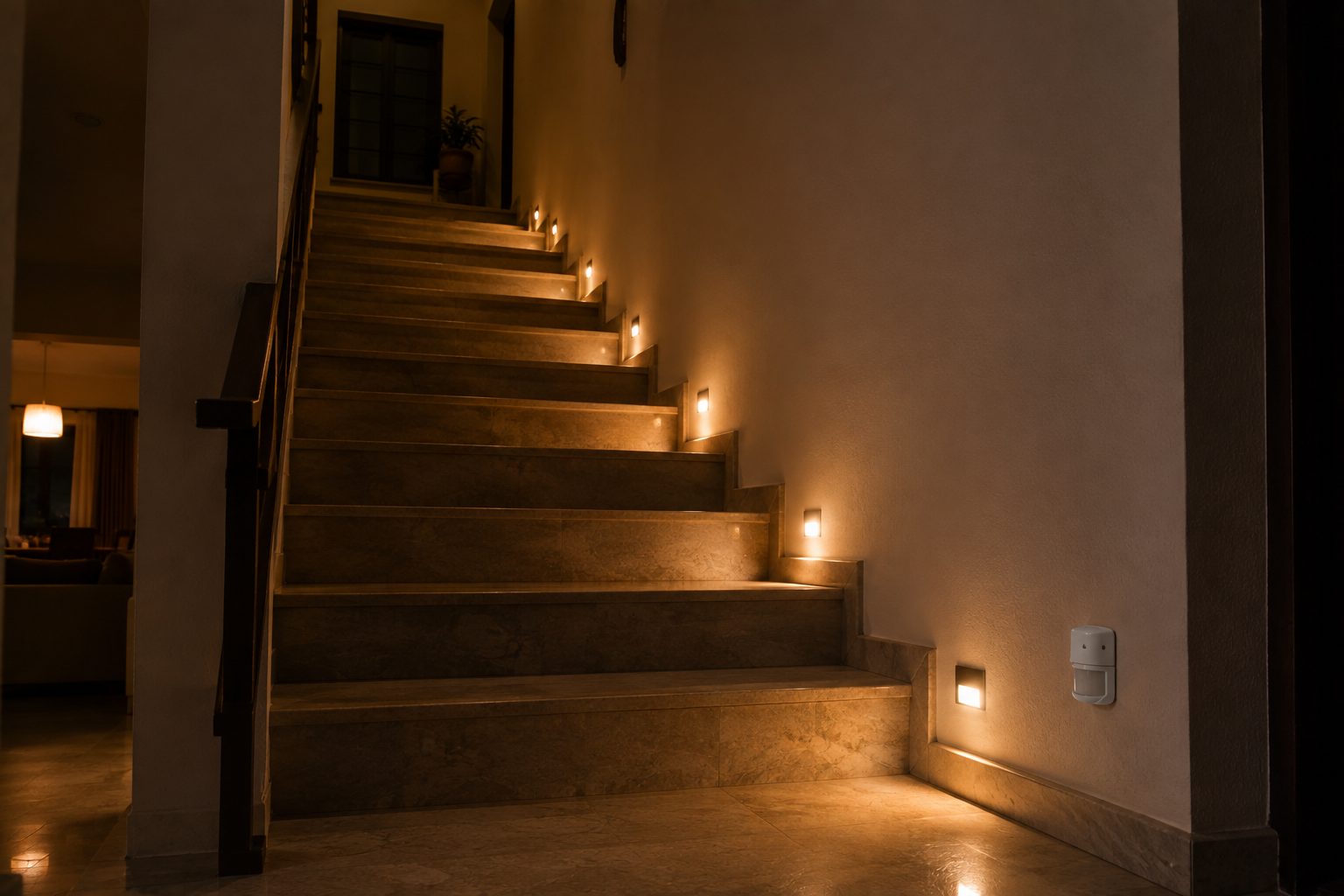
Start with what they already know how to use
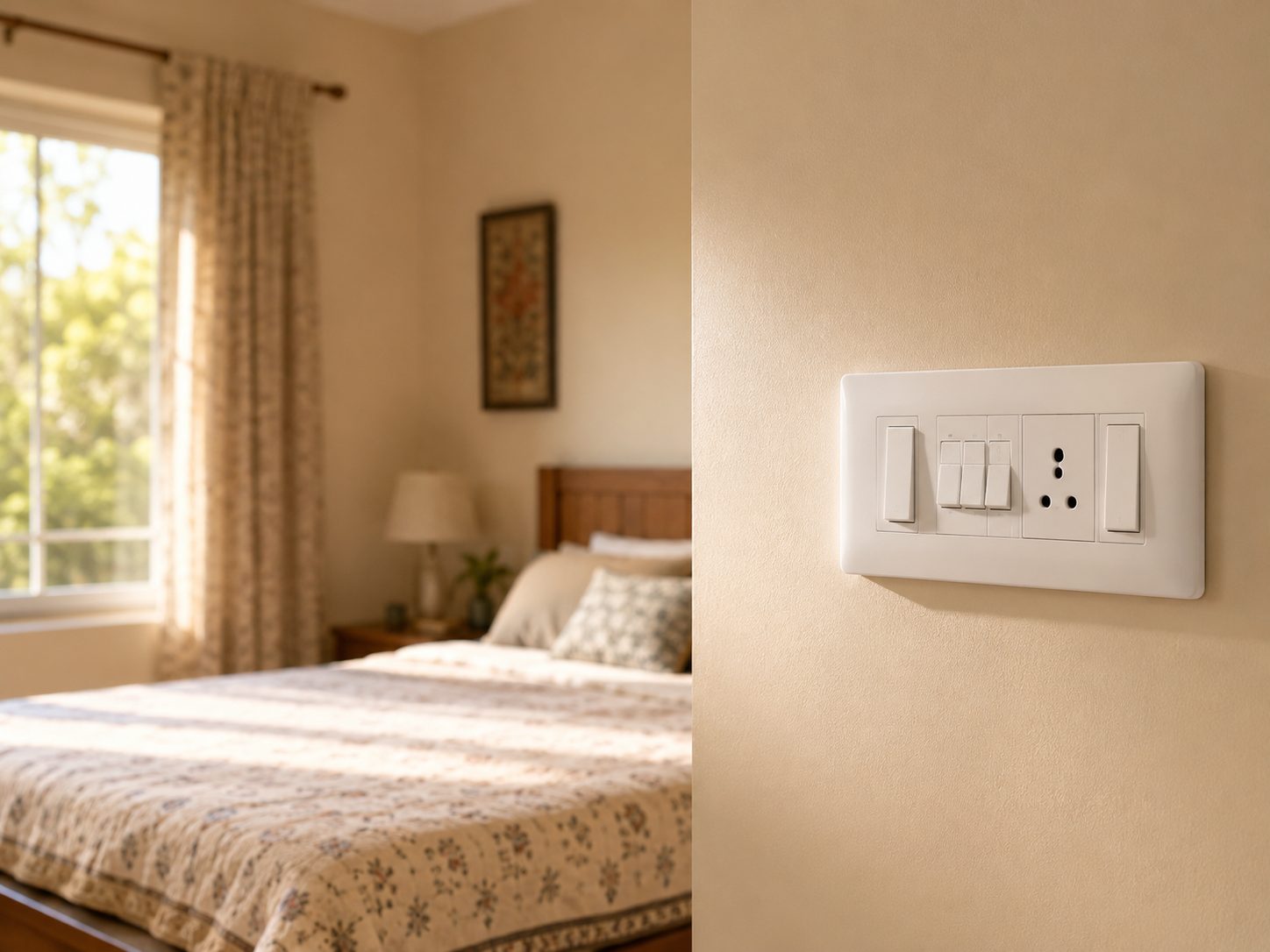
The wall switch is the interface your parents have used for forty years. It should not move, change height, or start behaving differently. Automation belongs behind it, not in front of it.
This is a design rule, and it decides the hardware. We fit a module into the back box that is already there, so what the module actually is stays out of sight. The plate on the wall keeps working by hand. Press it and the light comes on. Press it during a broadband outage and the light still comes on.
It is also why we would not put a smart bulb in a parent's house. A bulb is only smart while the wall switch is left on, and somebody always turns it off. The longer version is why we fit switches rather than bulbs.
The three things worth fitting first
Nearly everything useful in this category is one of three jobs. Fit these, live with them for a month, then decide whether you want anything else.
| What | What it solves | What it does not solve |
|---|---|---|
| Route lighting, bed to bathroom | Walking a dark corridor at 2am without finding a switch | Balance, a loose rug, a step nobody fixed |
| A controllable geyser | Left on all day, or cold when they wanted a bath | Water pressure, or a tank that emptied at 6am |
| The main door | Letting in a visiting nurse or a returning child without a key hunt | Anything at all if the key fallback is removed |
Route lighting does the most work for the least money. A sensor at the bedroom door and another in the corridor, set low and warm rather than bright, so nobody is dazzled at night. We tune the hold time on a return visit, because the right delay is the one you find after living with the wrong one. That is sensor lighting on the route, and it is the single item we would fit first.
Note what is not on this list. No scenes, no voice assistant, no camera. Those can come later if the household wants them. If you are looking at this for your own home rather than a parent's, the order is different and which room to do first covers it.
What happens when the power goes out
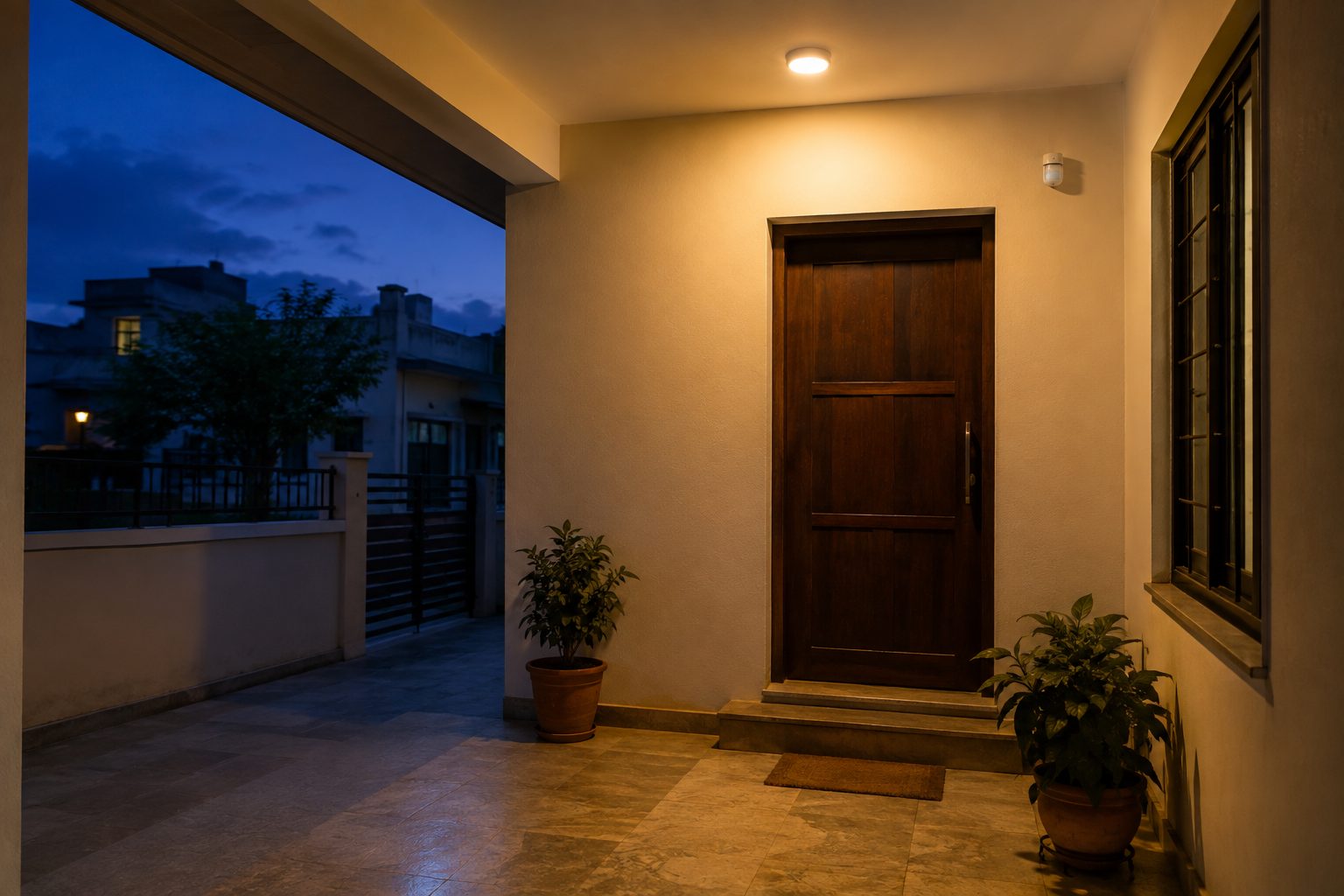
A power cut is normal in this city. Most homes have an inverter, and most inverters carry a few lights, a fan and the router. They do not carry everything. Fit a sensor light on a circuit the inverter does not reach and it goes dark exactly when the corridor is darkest. Your parents are by then walking a route they have stopped watching, because a light usually handles it.
That is worse than no sensor light at all, and the reason is behavioural, not electrical. Your parents stopped reaching for the switch because something else was doing it. The habit changed and the safety net did not survive the change.
Which circuits sit on the inverter is a question for any automated house, and we have covered what keeps running in an outage in general terms. What is specific here is the priority. In most homes you would back up the hub and the living room. In this one, the corridor between the bedroom and the bathroom comes first, ahead of anything anyone will enjoy.
Settle it before the work starts. Moving a circuit afterwards means opening the board again. A board with no spare neutral also limits what can be fitted, which is common in older Jaipur housing. You can check yours in five minutes with how to check your own board.
The parent who will not use an app, and the house with four people in it
Indian households are rarely one person and one phone. Parents live with adult children, grandchildren visit, and house help arrives every morning. Four people share one wall switch, and they have four different levels of comfort with a screen.
An automation tied to one person's phone breaks that. Three people can no longer do something they could do last week, so they work around it. Within a month the system is switched off at the board and nobody mentions it. We have seen this more often than we have seen hardware fail.
The fix is not training. Design it so the wall is the default path and the phone is the optional one. Then anybody who walks in can operate the house without being told anything.
Jaipur adds two more constraints. Summer decides priorities, so the geyser and the fans matter far more than the mood lighting in a plan like this. And the older housing stock, in the walled city and much of C-Scheme, was wired before anybody expected a module behind a plate. What is possible is set by what is in the board, which is why we open it and look before quoting.
What this does not do
Being straight matters here, because the claims in this category are the loosest on the subject.
This is not a medical system and we do not sell one. A motion sensor notices that a room was not entered. It does not notice a fall, it cannot tell the difference between a fall and a nap, and it cannot call anybody. If what you actually need is fall detection or an emergency response service, buy that separately from a company that does it. It is a different product.
A sensor light does not prevent falls. It removes one cause of one kind of fall, which is walking a dark corridor. That is genuinely worth doing and it is a smaller claim than the one usually made.
None of this replaces somebody checking in. It is a lit corridor and a geyser that turns itself off. It is not company and it is not care.
Somebody has to maintain it. Sensor batteries, a changed Wi-Fi password, the occasional firmware update. If nobody in the household will do that, fit less rather than fitting more, because an unmaintained system fails quietly. What actually breaks, and when is our own record of it, and the service centre is what happens when something does.
Questions people ask
How much does this cost?
It depends almost entirely on how many rooms are on the route and whether the board takes a module. We publish the published bands for every system rather than quoting a package for this, because a package would be a guess about your house.
What are the drawbacks?
Three, honestly. There is more to go wrong than in a house with plain switches. There is a maintenance job that did not exist before. And a badly tuned sensor is more irritating than no sensor, which is why the return visit to adjust it matters as much as the install.
Can I set this up from another city?
You can arrange and pay for it from anywhere, and plenty of our customers do. The part that does not work remotely is the tuning. Hold times, sensor angles and light levels get corrected after somebody has lived with them for a fortnight.
What if they hate it?
Then it comes out, and that is the advantage of fitting behind the plate rather than replacing it. The plate comes off, the module comes out, the original switch goes back. Nothing was chiselled, nothing was repainted, and the wall looks as it did.
Most people are not
ready to book a survey.
That is completely reasonable for a purchase this size. So here are three smaller steps that still get you a real answer, and one that gets you a price.
Send me the price list
One message on WhatsApp, and you get the band sheet back. Every package and add-on, with its working range. No call, no form.
Message on WhatsApp Two minutesSend a photo of your switchboard
Open the plate, photograph the wiring, send it. We will tell you whether you have a neutral wire. That single fact moves your price more than anything else.
Send a photo Ten minutesTalk it through on a call
Ring us and describe the house. We will tell you honestly whether what you want is a ₹40,000 job or a ₹6,00,000 one before anybody drives anywhere.
+91 92143 14348 The real answerBook the free survey
We come to your home, open a board, measure the windows, and give you a room-by-room design with a real number. Free, and you owe us nothing afterwards.
Book a survey